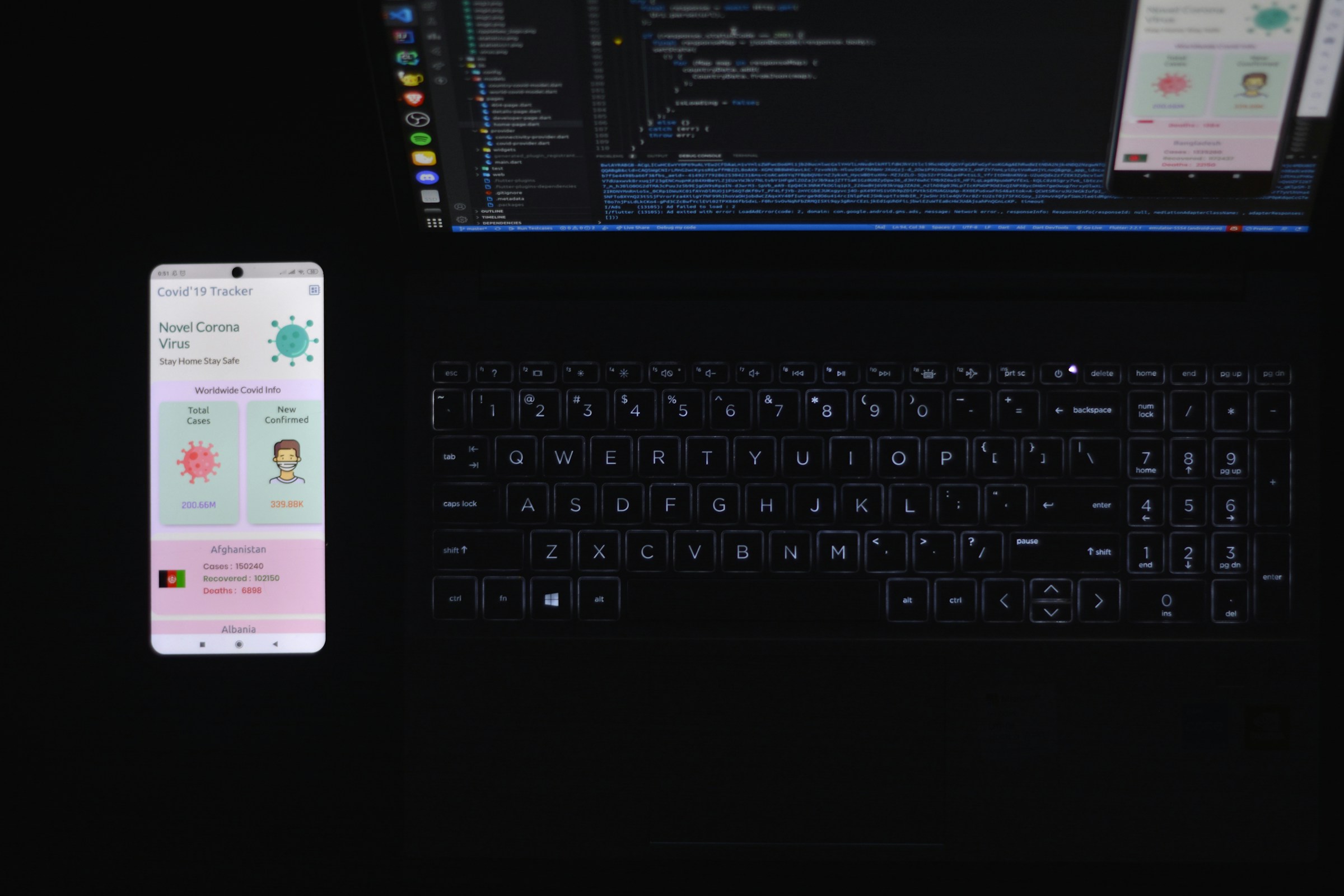
Flutter: 2026 Application Development on Steroids
Exploring how Flutter has evolved into the ultimate cross-platform development framework, transforming the way developers build applications across mobile, web, desktop, and embedded platforms in 2026.
Julian Morley
Flutter: 2026 Application Development on Steroids
As we step into 2026, the application development landscape has undergone a remarkable transformation. At the heart of this evolution sits Flutter, Google's open-source UI framework that has matured from a promising mobile development toolkit into a comprehensive solution for building natively compiled, multi-platform applications from a single codebase. What once seemed like an ambitious vision has become the de facto standard for organizations seeking to maximize development efficiency without compromising on quality or performance.
The Multi-Platform Reality
The promise of "write once, run anywhere" has haunted software engineering for decades, often delivering underwhelming results that forced developers to choose between code reusability and native performance. Flutter has shattered this false dichotomy. By compiling to ARM and Intel machine code—as well as JavaScript for web deployments—Flutter applications achieve performance characteristics indistinguishable from their platform-native counterparts (Flutter Dev, 2025).
Consider the scope of platforms Flutter now targets: iOS, Android, web browsers, Windows, macOS, Linux, and even embedded devices. This isn't just theoretical coverage; major enterprises like BMW, Google Pay, Alibaba, and eBay have deployed Flutter applications serving millions of users daily (Flutter Dev, 2025). When BMW integrates Flutter into their vehicle interfaces, or when financial institutions like Capital One and Nubank trust it for their mobile banking platforms, we're witnessing validation at the highest levels of production readiness.
Developer Experience That Actually Delivers
The true differentiator of Flutter in 2026 isn't just technical capability—it's the holistic developer experience. Hot reload functionality, once a novel feature, has evolved into hot restart capabilities that preserve application state across code changes, dramatically reducing the iteration cycle. The framework ships with comprehensive testing utilities, from widget tests to integration tests, enabling teams to maintain high code quality without cobbling together disparate testing frameworks.
Flutter's widget-based architecture represents a paradigm shift in how we conceptualize UI development. Everything is a widget—buttons, layouts, animations, even gestures. This compositional approach creates a mental model that scales from simple components to complex applications. Unlike traditional frameworks where UI and business logic often become entangled, Flutter's declarative syntax enforces a separation of concerns that enhances maintainability and reduces cognitive load (Flutter Dev, 2025).
The integration with Dart, Flutter's underlying programming language, deserves particular attention. Dart has evolved into a remarkably efficient language optimized for UI development. Its null-safety features, introduced in Dart 3.0 and refined through subsequent releases, eliminate entire classes of runtime errors. The language's ability to compile to multiple targets—native code for mobile and desktop, JavaScript for web—underpins Flutter's cross-platform capabilities without requiring developers to learn multiple language paradigms.
Performance Without Compromise
One of the most persistent criticisms of cross-platform frameworks has been performance penalties. Flutter's architecture directly addresses these concerns through its rendering engine, Skia, which draws UI elements directly to a platform-provided canvas. This approach bypasses the traditional bridge pattern that plagued earlier cross-platform solutions, where every UI interaction required costly context switches between JavaScript and native code.
The results speak for themselves. Flutter applications consistently achieve 60fps (frames per second) on most devices, with capable hardware reaching 120fps. This isn't marketing hyperbole—it's measurable, reproducible performance that users experience as smooth, responsive interfaces. The framework's layered architecture means developers can optimize performance at multiple levels, from widget composition to custom painting operations, providing escape hatches when specialized optimizations are needed.
The Ecosystem Advantage
Flutter's maturation into 2026 has been accompanied by an explosion in its package ecosystem. The pub.dev repository hosts tens of thousands of packages, covering everything from state management solutions to specialized UI components to platform integrations. This ecosystem effect creates a powerful network advantage: as more developers adopt Flutter, more packages are created, which in turn attracts more developers.
Google's integration strategy has been particularly effective. Seamless connections to Firebase, Google Cloud, Google Ads, and Google Pay lower the friction for developers building production applications. These integrations aren't afterthoughts—they're first-class citizens in the Flutter ecosystem, with official support and comprehensive documentation (Flutter Dev, 2025).
Enterprise Adoption and Production Scale
The list of companies deploying Flutter in production reads like a Fortune 500 directory. Beyond the previously mentioned organizations, companies like Toyota, The New York Times, Groupon, Tencent, and Square have bet their mobile strategies on Flutter. This enterprise adoption signals more than just technical capability—it demonstrates that Flutter meets the stringent requirements of security, compliance, accessibility, and long-term maintainability that large organizations demand.
These aren't pilot projects or experimental deployments. Google Pay's entire mobile experience runs on Flutter, processing billions of transactions annually. When applications handling financial transactions, personal health data, or mission-critical business operations choose Flutter, it validates the framework's production readiness at scale.
The Learning Curve and Community
Flutter's success isn't solely attributable to Google's backing—it's the vibrant, global open-source community that has formed around it. The framework's documentation is comprehensive and continuously updated. The community produces an endless stream of tutorials, courses, sample applications, and best-practice guides. When developers encounter challenges, they find support through official channels, community forums, and the extensive body of knowledge accumulated over years of production use.
For developers new to Flutter, the learning curve is surprisingly gentle. The declarative syntax feels familiar to anyone who has worked with modern frameworks like React or SwiftUI. The comprehensive codelabs and cookbook recipes lower the barrier to entry, enabling developers to build functional applications within hours of starting their Flutter journey.
Challenges and Considerations
No framework is without tradeoffs, and Flutter is no exception. Application size remains larger than purely native applications, though improvements in tree-shaking and deferred loading have significantly mitigated this concern. Platform-specific features occasionally require custom platform channel implementations, adding complexity for truly platform-unique functionality.
The abstraction Flutter provides, while powerful, can obscure platform-specific behavior in ways that occasionally surprise developers. Understanding when to embrace Flutter's unified model and when to reach for platform channels requires experience and judgment. For teams with deep platform-specific expertise, the transition to Flutter's paradigm represents a genuine shift in thinking.
Looking Forward
As we progress through 2026, Flutter's trajectory suggests continued evolution rather than revolutionary change. The framework has achieved a level of maturity where the focus shifts from adding capabilities to refinement, performance optimization, and developer experience enhancements. The recent introduction of Gemini AI integration in Android Studio, providing Flutter-specific assistance, hints at how development workflows will continue to evolve (Flutter Dev, 2025).
The framework's commitment to seamless interoperability with existing codebases—enabling incremental adoption rather than requiring complete rewrites—positions Flutter as a pragmatic choice for organizations with existing applications. This practical approach to modernization aligns with how real-world software development operates, where legacy systems and new development must coexist.
Conclusion
Flutter in 2026 represents the realization of cross-platform development's promise. It delivers native performance, comprehensive platform coverage, exceptional developer experience, and production-proven reliability. The framework hasn't just kept pace with the demands of modern application development—it has redefined what developers should expect from their tools.
For organizations evaluating their development strategy, Flutter offers a compelling value proposition: reduce development overhead by maintaining a single codebase while delivering platform-specific experiences that users perceive as native. For developers, it provides a modern, productive environment that eliminates the frustration of juggling multiple platform-specific implementations.
The question for 2026 isn't whether Flutter is ready for serious application development—the answer is unequivocally yes. The question is whether your organization is ready to embrace the efficiency, consistency, and velocity that Flutter enables. In an increasingly competitive landscape where time-to-market and development efficiency directly impact business outcomes, Flutter has evolved from an interesting option into a strategic advantage.
References
Flutter Dev. (2025). Flutter - Build for any screen. Retrieved from https://flutter.dev/
Flutter Dev. (2025). Multi-platform support. Retrieved from https://flutter.dev/multi-platform
Flutter Dev. (2025). Flutter showcase - Companies using Flutter. Retrieved from https://flutter.dev/showcase
Continuous Integration: Building Enterprise-Grade CI Pipelines
A comprehensive guide to implementing robust Continuous Integration practices that balance speed with safety in enterprise environments.
Building Production-Ready Go APIs in Scratch Containers
A practical guide to creating ultra-lightweight, secure Go APIs using Gin, GORM, and MariaDB/TiDB, compiled to static binaries and deployed in scratch containers for maximum efficiency.